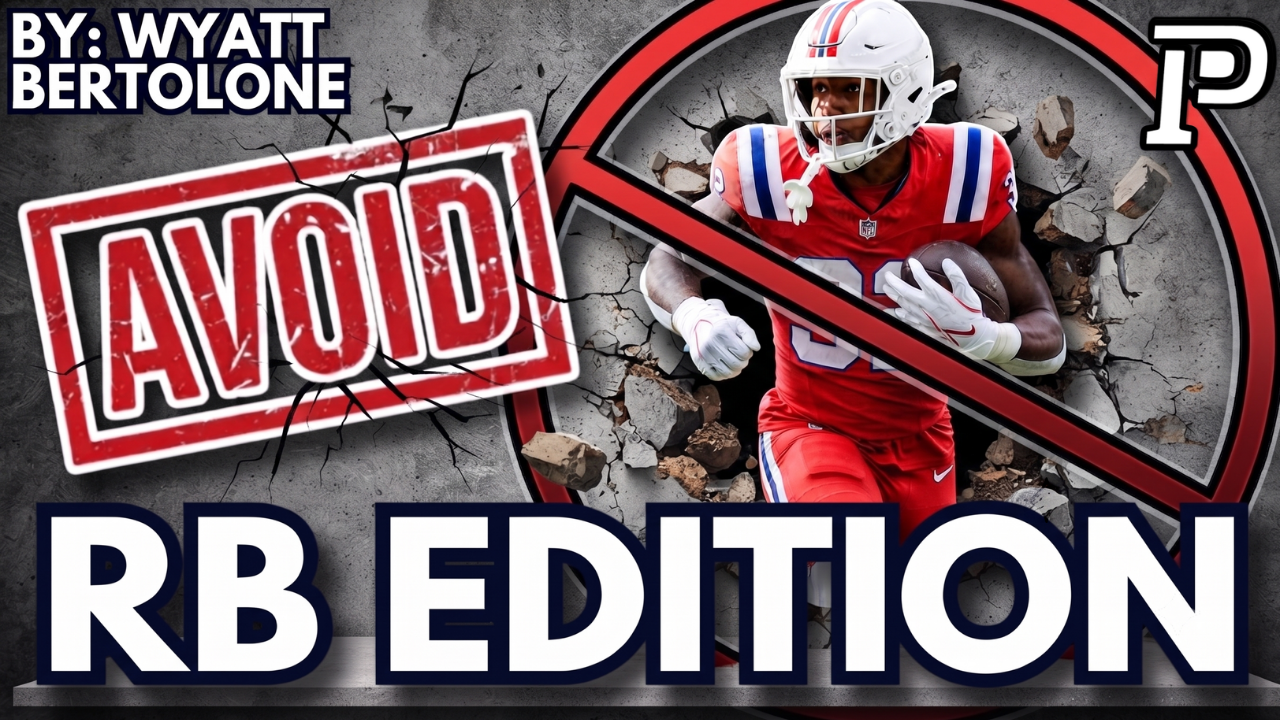
After two years of running backs being unusually healthy and a bad class of incoming players, the position is in an interesting place for 2026. Zero RB strategies are less common, and most drafters are making sure to lock up two to three players early in their drafts.
However, that doesn’t mean all running backs being drafted early are good picks. Here are five that you should practice “safe-distancing” with.
PlayerProfiler is home to award-winning dynasty rankings and tools. Our Dynasty Deluxe package includes complete Dynasty Rankings, Rookie Rankings, Trade Analyzer, Draft Planner, Mock Drafts, and more. Check it out.
If You Don’t Fade These Running Backs, You’re Gonna Have a Baaaaad Time
Kyren Williams, Los Angeles Rams
Even the biggest Kyren Williams fans couldn’t fathom the career he’s had so far. He had an uneventful rookie season after getting hurt on the opening kickoff of Week 1 of 2022, but dominated in his second season. In 2023, Williams scored 21.2 PPR PPG while scoring 15 touchdowns in only 12 games as the Rams’ workhorse. Despite not being a particularly dynamic running back, Williams is solid everywhere, and Sean McVay trusted him. He followed it up in 2024 with another great season, averaging 17 PPR PPG. In 2025, however, Williams started to see his role reduced with backfield mate Blake Corum earning more touches.
In 2023 and 2024, Kyren Williams had Opportunity Shares of 78.4% and 82.8%. Those marks were good enough for 4th and 2nd among all running backs. He also finished 2nd and 1st among running backs in Snap Share during that time. In 2025, though, Williams had a 64.8% Opportunity Share and a 69.9% Snap Share. Those marks dropped him to 19th and seventh, respectively, among running backs. Along with the drop in role, Williams’ PPR PPG dropped to 15.5. Still a good number, but not quite where you wanted for his cost in 2025. In 2026, his role could get worse. I don’t want to get caught holding Williams’ bags if it does.
Josh Jacobs, Green Bay Packers
Since he entered the NFL, Josh Jacobs has been one of the more consistent running backs in fantasy football. In his seven seasons, he’s never finished worse than RB18 in PPR PPG. At first glance, Jacobs delivered another solid campaign in 2025, posting 15.7 PPR PPG and securing yet another RB1 finish. However, his efficiency metrics tell a more concerning story, as his performance floor began to crumble. He ranked just 48th in True Yards per Carry and 39th in Yards per Touch, suggesting his production was more volume-dependent than talent-driven. At 28 years old and having carried a heavy load, Jacobs could be on a decline, but that’s not even the most concerning factor.
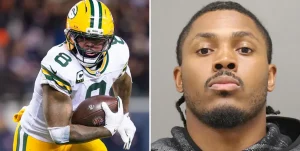
More troubling for Jacobs is the cloud of uncertainty surrounding his off-field situation; a May arrest for domestic abuse remains under active police investigation. With the threat of criminal charges or a significant league suspension looming, Jacobs now carries a dangerously wide range of outcomes that makes him a risky investment for 2026. His ADP has fallen some since the news first broke; however, it hasn’t fallen enough considering how his season could go poorly from two different directions. At his current price, it’s best to look elsewhere.
Javonte Williams, Cowboys
It’s important in fantasy football to adjust to new information. Players’ costs can change throughout the offseason and thus change their outlook. Earlier this offseason, I wrote about targeting Javonte Williams for 2026. At that time, the 2025 season was still fresh, where Williams was one of the best values in all of fantasy football. Additionally, Williams had an ADP at the end of the fifth round as RB23. Since then, his ADP has continued to rise. Now Williams is almost universally found in the third round of drafts. The difference between the third and fifth rounds is far bigger than it seems, and a two-round difference is even more impactful at the top of the draft.
While Williams’ 2025 season was great, scoring 15.2 PPR PPG as the Cowboys’ workhorse, he did have some concerning metrics. He was an average runner who handled a big workload —a skill in itself — but he was awful as a pass catcher. Williams averaged a dreadful 3.9 yards per reception and .48 Yards per Route Run. At his old ADP late in Round 5, Williams’ poor advanced metrics were easier to ignore. At his new ADP closer to the top, he presents too much risk. If he loses some of his opportunity share from 2025, especially any pass catching, it will be hard for him to be worth his cost.
TreVeyon Henderson, New England Patriots
Fantasy Football is funny sometimes. It was hard to find a bigger TreVeyon Henderson fan than me before the 2025 season. I drafted him everywhere. All in all, I was happy to have done so. On the season, Henderson gained over 1,100 total yards and 10 total touchdowns on his way to 12.1 PPR PPG. He had legitimate week-winning performances throughout the season. He displayed high-end efficiency at times, finishing 10th among running backs in yards per touch. Then, the end of the season happened, and many of us started to lose some faith.
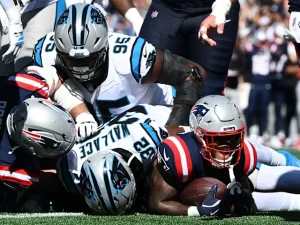
Including the playoffs, Treveyon Henderson scored no more than 8.2 PPR points in six of his last seven games. During that time, he played more than 43% of the snaps only once. He had fewer than 12 opportunities in 4 of those games. He didn’t earn a target in 4 of them as well. Rhamondre Stevenson was the Patriots’ trusted running back when it mattered most. Somehow, this hasn’t mattered much to drafters, as Henderson is still being drafted as a top 24 running back. In years past, he would almost certainly have a cheaper cost. Henderson could earn more of a role in 2026, but I don’t want to pay this price to find out he doesn’t.
Bucky Irving, Tampa Bay Buccaneers
Bucky Irving‘s rookie season was as impressive as they come, considering his draft capital (125th overall). He finished with 14.4 PPR PPG while being one of the most efficient running backs in the league. Among backs in 2024, Irving was No. 2 in Yards Created per Touch, third in Juke Rate, fifth in Yards per Touch, seventh in Breakaway Runs(!), and 10th in Yards per Route Run, for good measure. In the second half of the season, Irving earned a large role in the Buccaneers’ offense as well, handling at least 16 opportunities in eight of his last nine games (including the playoffs). 2025 was a different story, though.
The former Oregon product started his sophomore season as the Buccaneers’ workhorse before suffering an injury that kept him out seven games. When he returned, he came back to a reduced role. This was the fear with Irving. Almost all running backs of Irving’s size don’t handle heavy workloads all season. Instead, Rachaad White handled most of the pass catching, and Sean Tucker took care of short-yardage duties. Irving ended with 13.9 PPR PPG and saw his efficiency metrics drop off across the board. This offseason, the Buccaneers retained Tucker and traded out White while bringing in Kenneth Gainwell, whom they signed to a bigger-than-expected contract. It’s hard to see how Irving will have a good enough role in 2026 to justify his cost.